
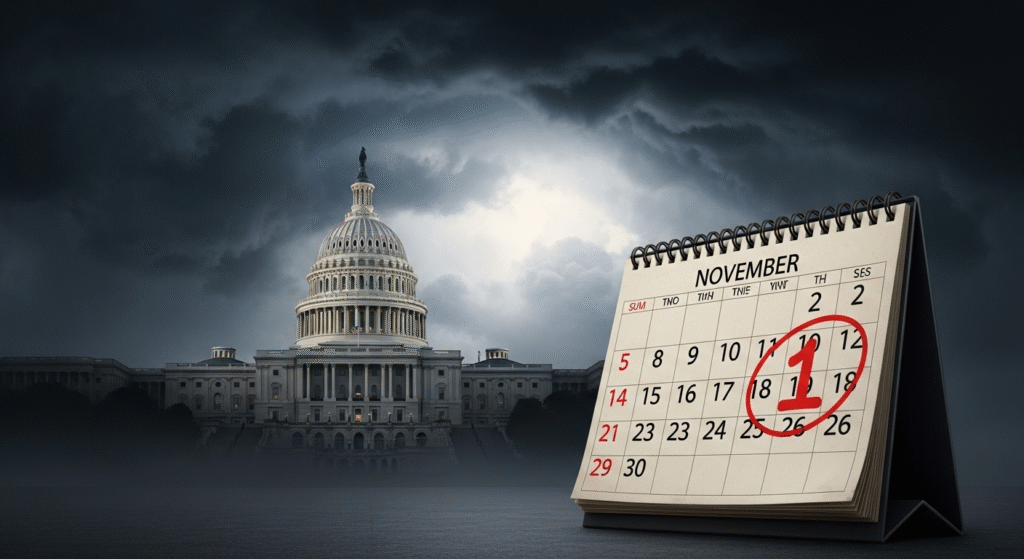
As the U.S. government shutdown extends into its fourth week, pressure on households, workers, and vital programs is reaching new highs. With President Donald Trump traveling abroad and
Congress still at a standstill, the beginning of November marks a dangerous turning point for millions of Americans who depend on federal services.

A Critical Week for Federal Programs
By November 1, funding for essential programs like SNAP, Head Start, and WIC will begin to dry up. Meanwhile, thousands of federal employees are missing paychecks, leading to disruptions across sectors from aviation safety to child nutrition.
Senate Majority Leader John Thune warned last week, “Things are about to get worse.”
And for many, that grim prediction could soon become reality.
1. SNAP Food Aid Could Run Dry
The Supplemental Nutrition Assistance Program (SNAP) — which provides food aid to more than 40 million Americans — is expected to start running out of funds this week.
According to internal memos, the Trump administration has no plans to tap emergency reserves, leaving at least 25 states preparing to reduce or halt benefits.
Lawmakers have urged the White House to use an agricultural contingency fund, but with only $5 billion remaining and nearly $9 billion needed for November, the numbers simply don’t add up.
Without congressional action, low-income families could face their first missed food benefits in early November.
2. Head Start Centers Set to Close
Federal funding for Head Start, a program supporting early childhood education for more than 800,000 children, will stop flowing at the end of this week.
More than 130 local programs across 41 states and Puerto Rico are bracing for closures. The National Head Start Association estimates that about 59,000 children could immediately lose access to care, nutrition, and learning resources.
Teachers and staff may go unpaid, forcing some centers to shut down temporarily or permanently if the shutdown continues.
3. WIC Assistance Facing Another Shortfall
Earlier this month, the administration redirected money from school meal programs to keep the Women, Infants, and Children (WIC) nutrition program afloat.
That stopgap measure is running out. Without another $300 million in emergency cash, 7 million low-income mothers and babies could lose critical food and health assistance as soon as Saturday.
“We are days away from losing WIC funding entirely,” warned one HHS official, underscoring the strain on vulnerable households.
4. Essential Air Service at Risk
The Essential Air Service (EAS) program — which keeps commercial flights running to small and rural communities — is also nearing its financial limit.
Some airlines in Alaska and remote U.S. regions may have to raise fares or suspend flights if subsidies disappear. The Transportation Department already used $42 million earlier this month to avoid disruptions, but that money won’t last much longer.
If funding runs out, rural residents could see air travel cut off entirely, worsening supply chain and medical access issues.
5. Military Pay and Morale on the Line
Unless President Trump once again shifts funds from other accounts, active-duty service members will miss their next paycheck.
Earlier this month, he redirected $6.5 billion from military R&D funds to pay troops, but that source is nearly depleted. A one-time $130 million private donation has also been accepted to help cover salaries, though it’s a temporary fix.
Pentagon officials caution that without new appropriations, even creative financial maneuvers won’t sustain payroll for long.
The White House insists it’s committed to maintaining military pay, but uncertainty is spreading fast across the ranks.
6. Federal Workers Brace for Missed Paychecks
Across the country, civilian federal employees are now missing their first full paychecks.
TSA agents, air traffic controllers, and postal workers are among those affected — raising concerns about travel delays and reduced safety oversight.
Congressional aides are also feeling the impact. House staffers will go unpaid this Friday, while their Senate counterparts face the same fate next week. Lawmakers themselves, however, continue receiving salaries as mandated by the Constitution.
Political Deadlock Deepens
Piecemeal Fixes Aren’t Working
While some lawmakers are pushing small-scale bills to restore specific services, none are expected to pass quickly. Senate Democrats recently blocked a proposal that would have allowed the president to decide which workers get paid — arguing it would give Trump too much leverage.
Speaker Mike Johnson’s Stance
House Speaker Mike Johnson has refused to recall members for piecemeal votes, saying it would “take pressure off” Senate Democrats to resolve the broader funding impasse.
This gridlock makes it unlikely that a comprehensive funding deal will emerge before mid-November.

What Happens Next?
Affordable Care Act Enrollment Adds to the Chaos
Adding another layer of complexity, open enrollment for the Affordable Care Act begins November 1. Millions of Americans could see higher premiums, as insurers worry that Congress won’t renew enhanced tax credits before they expire at the end of the year.
This uncertainty threatens to make health care less affordable for middle-class families — further amplifying the human toll of the shutdown.
The Bottom Line
The longer the government shutdown drags on, the more severe the consequences become. Food assistance, childcare, transportation, and even national defense payrolls are all at risk.
As Thanksgiving approaches, the political standoff shows little sign of ending — and millions of Americans are left wondering how much worse things will get before Washington finds a way forward.
💡 Read also: Winston Churchill: Royal Relationships and Political Legacy
Pingback: Objeto interestelar 3I/ATLAS: o misterioso visitante que atravessa o nosso Sistema Solar a grande velocidade - 123Mudar | Dicas e Tendências para Transformar Sua Vida